
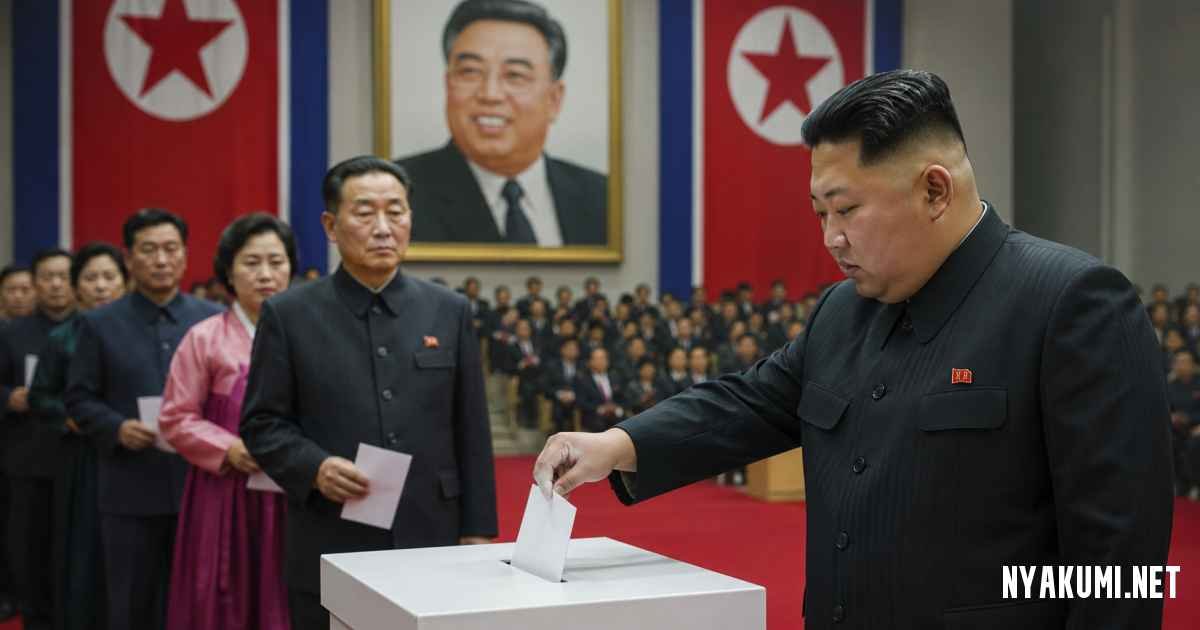

North Korea elections 2026 remain one of the most searched political topics as people try to understand how voting functions inside one of the world’s most secretive countries. Unlike democratic nations where multiple political parties compete for power, North Korea follows a single-candidate election system controlled by the Workers’ Party of Korea (WPK). Many users search for North Korea elections explained, North Korea election results 2026, does North Korea have real elections, and how does North Korea vote to separate facts from myths.
This comprehensive 2026 guide explains how North Korean elections work, the latest developments, voting procedures, election results, and why experts consider the process fundamentally different from democratic elections.
What Are North Korea Elections? Understanding the Political System
Despite its official name, the Democratic People’s Republic of Korea (DPRK), North Korea does not conduct elections in the same way as democratic countries. The country’s constitution states that power belongs to the people, but in practice, political authority is concentrated in the Workers’ Party of Korea (WPK) under the leadership of Kim Jong Un.
Here are the key facts about North Korea elections 2026:
- Official Country Name: Democratic People’s Republic of Korea (DPRK)
- Ruling Party: Workers’ Party of Korea (WPK)
- Supreme Leader: Kim Jong Un
- National Legislature: Supreme People’s Assembly (SPA) with 687 seats
- Local Assemblies: Provincial, city, and county People’s Assemblies
- Voting Age: 17 years and above
- Election Cycle: National elections every 5 years and local elections every 4 years
Every candidate appearing on the ballot must first receive approval from the Democratic Front for the Reunification of the Fatherland, an alliance dominated by the Workers’ Party. Each electoral district has only one approved candidate, leaving voters with only the option to approve or reject that nominee.
Types of Elections in North Korea and the Latest 2026 Update
North Korea organizes two primary types of elections.
Supreme People’s Assembly (SPA) Elections
The Supreme People’s Assembly is officially the country’s highest legislative body. It consists of 687 deputies who meet only a few times each year. Political analysts generally describe the SPA as a rubber-stamp parliament, as it formally approves policies already decided by the country’s leadership.
The previous SPA election took place on 10 March 2019. Although another election was expected in 2024, it was delayed. As of 2026, international observers expect preparations for the 15th Supreme People’s Assembly Election, although North Korea has not officially confirmed the final election date.
The SPA formally elects officials including:
- Chairman of the State Affairs Commission
- Premier
- Cabinet members
Local People’s Assembly Elections
North Korea also conducts elections for provincial, municipal, county, and city assemblies. The most recent local elections were held on 26 November 2023, where state media reported an official 99.91% voter turnout.
Both national and local elections are compulsory, and official turnout figures consistently exceed 99%, including 99.97% turnout during the 2019 SPA election.
How Voting Works in North Korea
The North Korean voting process differs significantly from elections held in democratic countries.
Step 1 – Candidate Selection
The Workers’ Party of Korea selects a single candidate for each constituency. There are no competing political parties, public debates, or election campaigns.
Step 2 – Receiving the Ballot
Each voter receives a ballot containing only one candidate’s name.
- Leaving the ballot unchanged counts as a “Yes” vote.
- Voting “No” requires crossing out the candidate’s name inside a designated booth.
Although the booth is officially secret, numerous researchers and human rights organizations report that voting against the candidate is considered extremely risky.
Step 3 – Mandatory Participation
Voting is compulsory for citizens aged 17 and older. Officials even provide mobile ballot boxes for elderly or sick citizens who cannot travel to polling stations.
Step 4 – Official Results
State media routinely reports that:
- Nearly 100% of eligible voters participated
- Every approved candidate received almost unanimous approval
For example, official reports from the 2019 election claimed that 100% of candidates were elected with 100% approval.
Step 5 – Public Celebrations
Following elections, North Korean media broadcasts parades, dances, and public celebrations, describing the results as proof of national unity behind Kim Jong Un.
Many political experts describe this process primarily as a loyalty demonstration and administrative census rather than a competitive election.
North Korea Elections 2026: Latest News and Political Expectations
The topic North Korea elections 2026 has attracted renewed international attention because analysts believe the next election could provide important clues about changes within the country’s leadership.
Several developments are being closely monitored.
Expected SPA Election
Although originally expected in 2024, the 15th Supreme People’s Assembly election has not yet been officially announced. Many observers now expect it in late 2026 or early 2027.
Constitutional Changes
Following constitutional revisions announced in 2024, South Korea was officially designated as North Korea’s primary enemy, replacing previous language emphasizing reunification. Future SPA sessions are expected to formalize these policy changes.
Kim Ju Ae Speculation
Since appearing alongside Kim Jong Un at military and official events, his daughter Kim Ju Ae has generated international speculation regarding a possible future leadership role. While she is considered too young to become an election candidate, analysts continue monitoring her increasing public profile.
Military Representation
Experts also expect greater representation of military officials, weapons scientists, and senior defense personnel, reflecting North Korea’s continued focus on missile development and national security.
Regardless of personnel changes, analysts widely expect the Workers’ Party of Korea to retain complete political control.
Why Does North Korea Hold Elections If There Is No Competition?
Many people ask why North Korea continues organizing elections when outcomes appear predetermined.
Political scientists generally identify several key purposes.
Legitimacy: Elections allow the government to present itself domestically and internationally as having public support.
Population Monitoring: Election day functions as a nationwide registration system, allowing authorities to verify citizens’ locations and participation.
Loyalty Testing: Participating in elections demonstrates loyalty to the state. Reports from researchers indicate that openly rejecting the approved candidate may attract official scrutiny.
Mass Mobilization: Election periods often include rallies, public events, and political education campaigns emphasizing national unity.
Identifying Dissent: Since voting “No” requires additional steps, analysts argue that the system can discourage public disagreement.
For these reasons, many international observers conclude that North Korean elections primarily reinforce political control rather than provide voters with meaningful electoral choice.
North Korea vs South Korea Elections: Key Differences
The contrast between North Korea and South Korea illustrates two fundamentally different political systems.
| Feature | North Korea | South Korea |
|---|---|---|
| Political System | One-party state | Multi-party democracy |
| Candidates | One approved candidate | Multiple competing candidates |
| Voter Choice | Yes or No | Free selection among candidates |
| Election Results | Nearly 100% approval | Competitive elections |
| Voter Turnout | Mandatory (99%+) | Voluntary (typically 70–77%) |
| National Leader | Kim Jong Un | President elected every five years |
For example, South Korea’s 2022 presidential election was decided by approximately 0.73 percentage points, illustrating genuine electoral competition. By contrast, North Korean elections routinely report approval rates approaching 100%.
Final Verdict on North Korea Elections 2026
North Korea elections 2026 remain unlike elections held in democratic countries. While citizens do participate in organized voting, only one approved candidate appears on each ballot, and the political process operates under the authority of the Workers’ Party of Korea led by Kim Jong Un.
The expected 15th Supreme People’s Assembly election will likely provide insight into personnel changes, constitutional developments, and the country’s future political direction. However, international analysts generally do not view these elections as free or competitive because voters cannot choose between multiple candidates or political parties.
If you are researching North Korea elections explained, remember these important terms: Supreme People’s Assembly, Workers’ Party of Korea, Kim Jong Un, single-candidate elections, mandatory voting, 99% voter turnout, and rubber-stamp parliament.
For the most reliable updates regarding North Korea elections 2026, monitor official announcements from KCNA while comparing them with independent analysis from organizations such as 38 North, NK News, and other reputable international research institutions.