
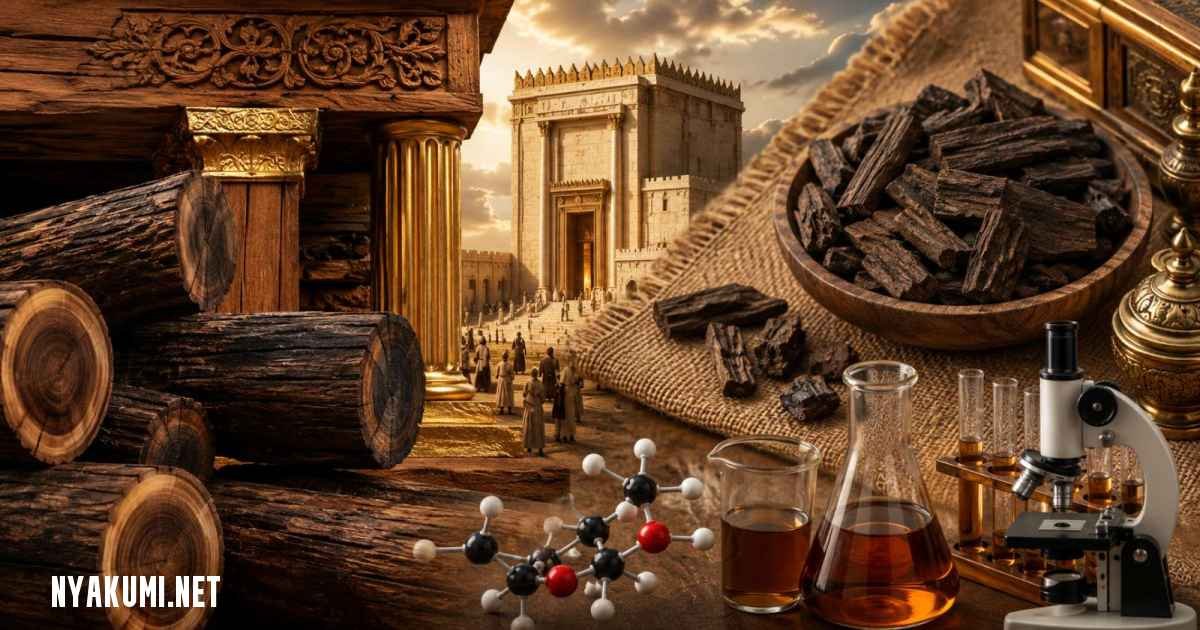

Alogum is one of the most mysterious and valuable materials mentioned in ancient history. If you’ve searched for Alogum in 2026, you’re likely looking for the legendary biblical wood also known as Algum or Almug. From the magnificent Temple of King Solomon to modern botanical research, Alogum continues to attract historians, biblical scholars, scientists, and plant enthusiasts alike. This remarkable wood is associated with luxury, worship, craftsmanship, and even modern genetics. In this complete guide, you’ll discover its meaning, biblical significance, historical origins, scientific identification, and why it still matters today.
What Is Alogum? Meaning and Origin
Alogum (Hebrew: ’algūmmīm)—also written as Algum or Almug (Hebrew: ’almuggīm)—refers to a rare and precious wood mentioned in the Hebrew Bible. Although the exact tree species has been debated for centuries, biblical descriptions clearly indicate that it was an imported luxury material rather than a native tree of ancient Israel.
The word appears in 1 Kings 10:11–12, 2 Chronicles 2:8, and 2 Chronicles 9:10–11. According to these passages, King Hiram of Tyre supplied ships that brought gold, precious stones, and Alogum wood from the mysterious land of Ophir for King Solomon.
The location of Ophir remains uncertain, with scholars proposing India, Arabia, or East Africa as possible locations. Among these theories, India is widely considered the strongest candidate because of its long history of exporting valuable hardwoods, especially sandalwood.
Because different Bible translations use different spellings, Alogum, Algum, and Almug tree all refer to the same legendary wood.
Alogum in the Bible: The Sacred Wood of Solomon’s Temple
The most famous references to Alogum in the Bible relate to the construction and decoration of Solomon’s First Temple in Jerusalem, one of history’s most significant religious buildings.
According to Scripture, this extraordinary wood was reserved for sacred and royal purposes due to its rarity and beauty. The Bible describes three primary uses:
- Temple pillars and structural supports alongside cedar and pine.
- Harps and lyres for temple musicians because of its excellent acoustic qualities.
- Royal terraces, furniture, and palace decorations showcasing wealth and craftsmanship.
Its limited use demonstrates that Alogum was far more than ordinary timber. It symbolized wealth, holiness, prestige, and devotion. The biblical statement that “there came no such almug trees, nor were seen unto this day” emphasizes how exceptionally rare this wood was considered during Solomon’s reign.
For both Jewish and Christian traditions, Alogum became a lasting symbol of offerings worthy of God’s house.
What Tree Was Alogum? Modern Botanical Identification
For over 2,000 years, scholars have debated the true botanical identity of Alogum. Since no tree matching the biblical description naturally grows in Israel, historians rely on trade records, linguistic studies, and botanical evidence.
Today, three leading candidates are commonly discussed.
| Possible Identification | Scientific Name | Why Scholars Consider It |
|---|---|---|
| Red Sandalwood | Pterocarpus santalinus | Most accepted theory; dense, durable, fragrant, and native to India. |
| White Sandalwood | Santalum album | Famous for fragrance, perfumes, and religious ceremonies. |
| Juniper or Cypress | Various species | Suggested by early dictionaries because of building strength. |
Among these possibilities, Red Sandalwood is now regarded by many Bible encyclopedias and theological references as the strongest match. Its deep reddish color, natural resistance to decay, fine grain, and luxurious appearance closely match biblical descriptions.
Ancient maritime trade between India and the Near East also supports this theory, making it highly plausible that ships returning from Ophir transported valuable sandalwood alongside gold and gemstones.
Why Was Alogum So Valuable? Unique Characteristics
The Bible consistently portrays Alogum as one of the most prized materials of the ancient world. Several remarkable characteristics explain why it commanded such respect.
Exceptional durability made it naturally resistant to insects, fungal decay, and moisture, allowing temple structures and palace furnishings to survive for generations.
Natural fragrance is another reason many researchers identify it with sandalwood. Unlike ordinary timber, sandalwood releases a pleasant aroma that can remain for decades, making it ideal for sacred spaces and religious ceremonies.
Its beautiful appearance also contributed to its prestige. Fine reddish or dark brown grain with an elegant polish made it perfect for luxury furniture and architectural details worthy of a king.
Perhaps most importantly, Alogum possessed excellent acoustic properties. Dense hardwood produces rich, resonant tones, explaining why Solomon’s craftsmen selected it for harps and lyres used in temple worship.
Because of these qualities, Alogum became an international luxury commodity, valued alongside gold, precious stones, and rare spices in ancient trade.
Alogum in Modern Science: The ALOG Gene Family
In 2026, the word ALOG has gained an entirely different scientific meaning that often surprises researchers and students.
In modern plant genetics, ALOG stands for Arabidopsis LSH1 and Oryza G1, describing a family of DUF640 domain proteins found exclusively in land plants.
Scientists have identified these genes in important species such as:
- Arabidopsis
- Rice (Oryza)
- Petunia
- Various flowering plants
Current research shows that the ALOG gene family regulates several critical developmental processes, including:
- Flower formation and floral shape
- Leaf growth
- Shoot development
- Crop productivity
- Plant architecture
These discoveries have major agricultural implications. Researchers believe better understanding of ALOG genes may help improve crop yields, strengthen food security, and develop plants better adapted to changing climates.
As a result, someone searching for Alogum today may actually be looking for information about these groundbreaking plant genetics studies rather than biblical wood.
Alogum vs. Algum vs. Almug: Which Spelling Is Correct?
One of the most common questions online is whether Alogum, Algum, or Almug is the correct spelling.
The simple answer is that all three are correct.
They represent different transliterations of the same ancient Hebrew word.
- Algum is the spelling most commonly found in many English Bible translations.
- Almug appears in older translations and is generally regarded as an alternative or historical spelling.
- Alogum is a modern phonetic variation that has become increasingly popular in online searches and SEO content.
For websites targeting search traffic in 2026, using both Alogum and Algum wood naturally throughout the content improves search visibility because users search using multiple spellings.
Spiritual Meaning and Symbolism of Alogum in 2026
Beyond its historical and scientific importance, Alogum carries profound spiritual symbolism.
Because it was used exclusively in God’s Temple, many believers associate it with purity, holiness, and reverence. The effort required to transport it from distant lands also symbolizes sacrifice, reminding readers that offerings to God often came at significant cost.
Its use in crafting musical instruments connects Alogum with joyful worship, praise, and devotion. For this reason, sandalwood products are still widely used in religious traditions around the world.
In 2026, many people use sandalwood prayer beads, incense, essential oils, and meditation accessories believing they promote calmness, focus, and spiritual reflection. While these spiritual practices vary among traditions, sandalwood remains respected for its distinctive fragrance and cultural significance.
Anyone purchasing products marketed as Alogum wood should choose certified sustainable sources, since genuine sandalwood species are protected in many regions due to overharvesting.
Conclusion
From the magnificent Temple of Solomon to cutting-edge plant genetics, Alogum has remained a fascinating subject for over 3,000 years. Whether known as Algum wood, the Almug tree, or identified with Indian sandalwood, it represents rarity, craftsmanship, devotion, and enduring value.
Modern scholarship largely supports the view that Alogum was most likely Red Sandalwood (Pterocarpus santalinus), imported through ancient trade routes from Ophir. At the same time, the rise of the ALOG gene family in botanical science has given the name fresh relevance in agricultural research and plant biology.
Whether your interest lies in biblical history, archaeology, botany, or spirituality, Alogum remains a remarkable example of how one ancient word can connect religion, commerce, science, and culture across thousands of years. In short, Alogum is not just wood—it is a legacy.